Welcome to VEOTMAC 2026!
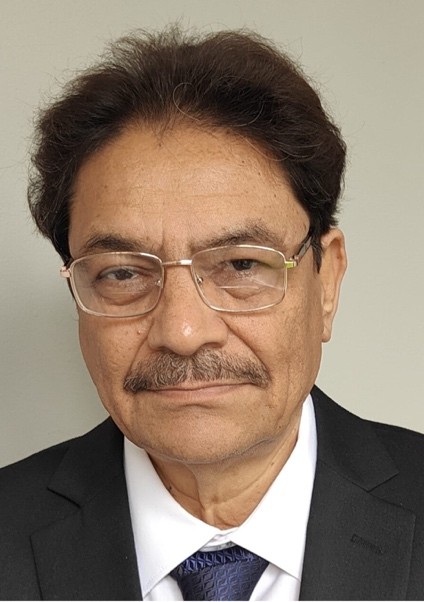
Plenary Speaker I
Prof. N.S. Vyas
Indian Institute of Technology Kanpur
India
Title: Nonlinear Vibration Diagnostics: Volterra and Wiener Series to Digital Twins
Abstract:
Rotating and rolling machinery — turbine blades, rotor-bearing systems, and rail vehicle bogies alike — routinely violate the small-perturbation assumption underlying classical linear modal analysis. Bearing clearances, contact nonlinearities, and large-amplitude transient operation render the frequency response amplitude-dependent, while identification must frequently proceed from ambient random response rather than controlled excitation. This talk traces a body of work addressing this class of problems, beginning with deterministic models of turbine blade dynamics under transient angular acceleration and speed changes, and progressing to a sustained programme of nonlinear system identification built on Volterra and Wiener series representations. Higher-order kernels, extracted through multi-tone harmonic probing and recursive estimation procedures, are shown to recover not only linear parameters but the specific class of nonlinearity — clearance, cubic stiffness, or asymmetric damping — directly from measured response, with convergence criteria established for the truncated series. The talk then follows the natural extension of these ideas: from parameter estimation to fault diagnosis, as kernels and wavelet-derived features became inputs to early neural-network-based condition monitoring systems, and subsequently to the deep convolutional architectures now used for multi-label fault classification from raw, unprocessed multi-sensor data. The concluding section argues that today's "physics-informed" digital twins — which fuse a reduced physics backbone with a data-driven residual layer for continuous state estimation — are, in an important sense, re-solving the interpretability problem that Volterra and Wiener kernels solved analytically three decades earlier. This continuity is illustrated through two live application threads: physics-aware digital twins for aero-engine health management, and multibody-dynamics-coupled digital twins for rail bogie and coupler fault diagnosis. The talk closes with open problems in cross-domain kernel transfer, uncertainty quantification in hybrid twins, and real-time deployment at sensor rate — an agenda directly relevant to VETOMAC's emerging focus on AI-driven prognostics and model-test integration.
Biography:
Nalinaksh S. Vyas is Professor Emeritus in the Department of Mechanical Engineering at the Indian Institute of Technology Kanpur, where he served on the faculty from 1987 to 2024 and headed the department from 2008 to 2011. He holds a Ph.D. from IIT Delhi (1986) and has held visiting positions at various universities outside India. From 2015 to 2022 he served as Chairman of the Technology Mission for Indian Railways, Ministry of Railways, leading the introduction of Industry 4.0 protocols in rail-coach manufacturing, and has been lately advising Aeronautical Agencies on digital-twin initiatives for aircraft systems. His research spans nonlinear system identification, rotor and rail vehicle dynamics, MEMS and smart structures, and condition monitoring, including foundational work on Volterra and Wiener series methods for nonlinear parameter estimation in rotor-bearing systems. He coordinated the design, development, and 2012 launch of JUGNU, India's first nanosatellite, with ISRO, and was recognized by India Today (2010) as one of 20 innovators changing India's technological landscape. He has authored over 150 journal and conference publications, supervised 112 doctoral and master's theses, and serves as editor of the Journal of Rail and Rapid Transit and the Journal of Vibration Engineering and Technologies.
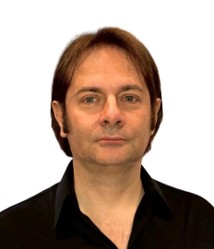
Plenary Speaker II
Prof. Marco Amabili
Westlake University
China
Title: Nonlinear damping and internal resonance in large-amplitude vibrations
Abstract:
An increase in damping is relevant for the passive control of vibrations and noise; therefore, it is very significant in design. Experimental data show a strong and nonlinear dependence of damping on the vibration amplitude for beams, plates, and shells of different sizes and made of different materials (metal, composite materials, silicone rubber, and graphene). While the frequency shift of resonances due to stiffness nonlinearity is commonly 10 to 25 % at most for common structural elements, a damping value up to several times larger than the linear one can be obtained for vibrations of thin plates when the vibration amplitude is about twice the thickness. This is a huge change in the damping value! Therefore, the nonlinear nature of damping affects structural vibrations much more than stiffness nonlinearity. Despite this experimental evidence, nonlinear damping has not been sufficiently studied yet. A model of nonlinear damping was derived from linear viscoelasticity for single-degree-of-freedom systems and rectangular plates by introducing geometric nonlinearity. The resulting damping model was nonlinear, and the model parameters were identified from experiments. Numerical results for forced vibration responses of different structural elements in large-amplitude (nonlinear) regimes were obtained and successfully compared to experimental results, validating the nonlinear damping model. Recently, the effect of nonlinear damping on one-to-one internal resonances was addressed. This type of resonance appears in the case of symmetry: circular cylindrical shells and square plates are examples, as well as beams with circular cross-section in three-dimensional space. The results of this new development in the study of nonlinear damping are particularly interesting.
Keywords: nonlinear damping; large-amplitude vibrations; plates; internal resonance; damping increase.
Biography:
Marco Amabili is a Changjiang Chair professor at Westlake University, Hangzhou, China, and Emeritus Distinguished professor at McGill University, Montreal, Canada. He is an Int. Member of the National Academy of Engineering of the USA, a Fellow of the Royal Society of Canada and Canadian Academy of Engineering, member of Academia Europaea, European Academy of Sciences and Arts, and European Academy of Sciences. He received the 2020 Worcester Reed Medal of the ASME, the 2022 Guggenheim Fellowship in Engineering, the 2021 Mindlin medal of the ASCE, the 2021 Gili-Agostinelli International prize of the Italian National Academy of Sciences, the 2022 Blaise Pascal medal of the European Academy of Sciences and the 2022 Rayleigh Lecture Award of ASME. He was elected Honorary Member of the ASME in 2024 and received the 2025 Cozzarelli Prize of the National Academy of Sciences of the USA. He is the Editor-in-Chief of the International Journal of Non-linear Mechanics (Elsevier) and co-editor-in-Chief of the Int. J. of Mechanical System Dynamics (Wiley).
Plenary Speaker III
Prof. Shunming Li
Nanjing University of Aeronautics and Astronautics
China
Title: Development and Application of Internet of Vehicles Technology in China
Abstract:
Based on the development of artificial intelligence, China's Internet of Vehicles (IoV) and application technologies have taken a leading position in the world. It is highly necessary to share these achievements with international peers, as well as to provide a reference for the technological development of IoV in countries around the world. The basic concepts and technical framework of IoV technology is first introduced in this paper. The development of AI technology and its relationship with IoV, and typical application scenarios and key values of IoV technology is then introduced. The six core trends in the development and evolution of IoV technology, the key milestones for development in 2026, as well as the challenges it faces and corresponding countermeasures is then presented. The successful application of IoV technology in China is provided in fourth part. The impact of the development of IoV technology on the automotive industry and its services, and on future transportation and society is finally discussed.
Biography:
Li Shunming, Ph.D., Professor at Nanjing University of Aeronautics and Astronautics. His main research directions are vibration and noise analysis and control, modern signal processing theory and applications, intelligent health monitoring and fault diagnosis, vehicle intelligence, and modern design technology. He has led and completed over 80 projects, including National Major Projects, National Key Research and Development Programs, and the National Natural Science Foundation. He has won 9 awards for scientific and technological progress, including the Chinese Ministry of Education Award. He has published over 300 academic papers indexed by SCI/EI and holds nearly 40 invention patents and software copyrights.
The list of plenary speakers is continuously being updated.
© 21st VETOMAC 2026 | All rights reserved.